



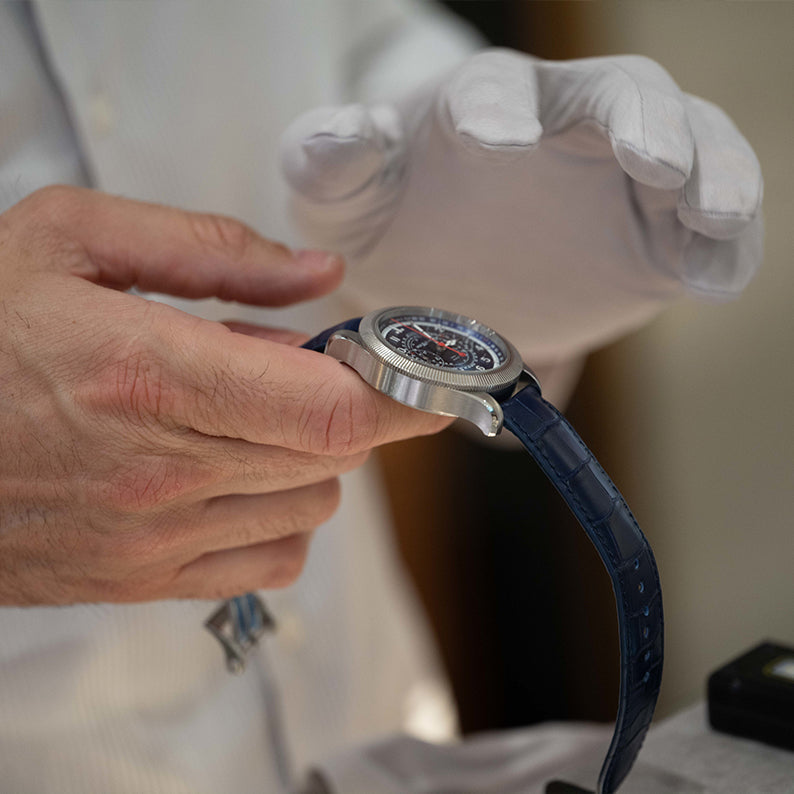
A good watch is one of the few possessions you'll likely use thousands of times without thinking about it. It becomes part of your routine. You glance at it during meetings, wear it while traveling, bring it along to celebrations, and perhaps one day pass it on to someone else.
That's why watch care is often misunderstood. Many owners assume maintaining a watch simply means keeping it clean and avoiding obvious damage. In reality, the biggest threats to a watch's longevity often develop out of sight. Lubricants age, gaskets deteriorate, and moisture can enter the case long before you notice anything wrong.
Whether you own a Rolex Submariner, an Omega Speedmaster, or a Grand Seiko, understanding a few key principles can help ensure your watch continues to perform as intended for years, or even generations.
Your watch is a machine, not just an accessory
One of the most common misconceptions among new collectors is that a mechanical watch will continue running indefinitely if it appears to be functioning normally.
Inside a modern mechanical movement are dozens, sometimes hundreds, of moving components working together with extremely tight tolerances. Oils and lubricants reduce friction between these parts, but over time, those lubricants begin to break down.
Think of it like changing the oil in a car. The engine may still run, but that doesn't mean everything inside is operating under ideal conditions.
This is why understanding when to service a watch is so important. Most manufacturers recommend servicing a watch every 5 to 10 years, depending on the brand, movement, and how often it is worn. A routine service is almost always less expensive and less invasive than repairing a movement after significant wear has already occurred.
The secret to preventing scratches
Every collector eventually gets their first scratch. It might happen while reaching across a desk, brushing against a door frame, or setting the watch down on a hard surface. If you're wondering how to protect a watch from scratches, the answer isn't found in protective films or complicated accessories. It starts with awareness.
Many scratches occur during storage rather than while being worn. Watches tossed into drawers alongside jewelry, cufflinks, keys, or other watches often accumulate unnecessary marks. When removing your watch at the end of the day, place it on a soft surface or return it to a watch box designed with separate compartments.
Storage matters more than most owners realize
A watch spends far more time off the wrist than on it. That's why understanding how to store watches when not in use can have a significant impact on long-term condition. Ideally, watches should be kept in a clean, dry environment away from direct sunlight, excessive heat, and large temperature fluctuations.
If you own automatic watches that rotate through your collection, a watch box is often all you need. Watch winders can also be useful for certain complications. By keeping a watch running while it's off the wrist, a winder can help maintain the settings of complicated timepieces with calendars, moon phases, or other functions that take time to reset.
Cleaning your watch the right way
Every watch owner eventually asks, “What is the best way to clean a watch?” The answer depends on the watch. For most metal-bracelet watches with sufficient water resistance, a soft microfiber cloth and occasional cleaning with lukewarm water are enough to remove everyday dirt and oils. Leather straps require a different approach and generally should not be submerged in or heavily exposed to moisture.
Professional cleaning focuses on removing contaminants while preserving the watch's original character. That's one reason many collectors choose periodic professional inspections rather than relying solely on at-home maintenance.
Why professional servicing matters
A proper watch service involves much more than replacing a battery or regulating timekeeping. During a complete service, the movement is disassembled, cleaned, inspected, lubricated, reassembled, regulated, and tested. Water resistance is also evaluated through pressure testing to verify that the seals and gaskets continue to perform properly.
For quartz watch owners wondering where to go for a battery replacement, it's worth remembering that a battery change is also an opportunity to inspect the seals, check the watch's water resistance, and evaluate its overall condition.
At Zadok Jewelers, the in-house watchmakers service a wide range of luxury timepieces, from everyday favorites to highly complicated mechanical watches.
A watch worth keeping deserves proper care
The best watches are designed to outlast trends. A little attention to storage, cleaning, and servicing can dramatically extend a watch's lifespan. More importantly, it ensures the watch continues to perform the way its makers intended.
At the end of the day, a great watch isn't simply something you own. It's something you maintain, enjoy, and eventually pass on.
