



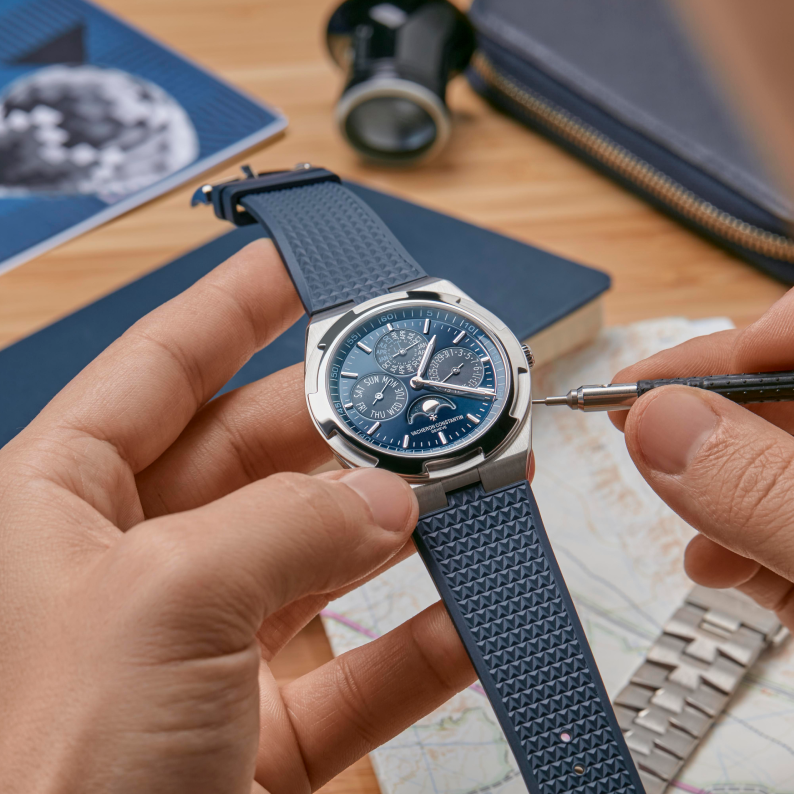
Owning a fine luxury watch comes with a responsibility. These timepieces work hard every day, keeping time through hundreds of tiny moving parts that rely on proper care to stay healthy. Understanding watch service helps you protect that investment and enjoy your watch for years to come. This guide walks you through what servicing really means, how the process works, and when it is time to bring your watch in.
Watch Service vs. Watch Repair: What’s the Difference?
Watch repair is reactive. It steps in after something has already gone wrong, like a faulty movement or broken component. Watch service works differently. It involves preventative care that keeps everything running smoothly, even before problems appear. Think of service as routine upkeep that protects your watch from bigger, more expensive issues later.
A proper service refreshes lubricants, replaces worn seals, and checks timekeeping accuracy. Over time, oils dry out and friction increases. Left alone, that wear spreads through the movement. Regular service helps avoid that chain reaction and keeps performance close to factory standards. These basics form the foundation of smart watch maintenance tips and are central to learning how to take care of your watch properly.
What Happens During a Professional Watch Service?
Every thorough service starts with a visual inspection. A watchmaker looks closely at the case, bracelet, and crystal, checking for signs of impact or moisture. The watch’s functions are tested to understand how it is performing before any work begins.
From there, the movement is fully disassembled. This step separates true servicing from quick fixes. A complete service takes the caliber apart piece by piece. Each component is carefully organized and cleaned using ultrasonic solutions that remove old oils and microscopic debris. This deep cleaning resets the movement and prepares it for accurate reassembly.
Once cleaned, the movement is rebuilt with close attention to detail. Worn or damaged parts are replaced as needed, and fresh lubricants are applied in precise amounts. This stage plays a major role in how to maintain an automatic watch in particular, since correct lubrication directly affects power reserve and accuracy. The case, crystal, and bracelet are also cleaned thoroughly, since dirt and grit also cause wear on metal surfaces.
Once the watch is fully reassembled, regulation begins. The watchmaker adjusts the movement to bring timekeeping within manufacturer specifications. The watch is then tested several times to ensure consistent performance.
How Often Should a Watch Be Serviced?
Service intervals depend on the brand, movement, and how often the watch is worn. For example, how often do Rolex watches need servicing, in particular?, No matter the brand, the general answer falls between five and ten years, depending on the model, usage, and condition.
Signs Your Watch May Be Due for Service
Sometimes your watch tells you it needs attention. If it starts gaining or losing more time than usual, that is often an early warning sign. Fogging under the crystal points to weakened seals and moisture intrusion. A shortened power reserve, where an automatic watch no longer runs as long as it once did, often means oils have dried out. These clues are your watch asking for care.
Where to Get Your Watch Serviced with Confidence
Choosing the right service center matters. For those wondering where to get a watch serviced, or specifically, where to get Rolex watches serviced, working with an authorized and experienced team makes all the difference. At Zadok Jewelers, our watch service team brings deep training, precision tools, and brand-specific knowledge to every timepiece that comes through the door.
Most importantly, watch service is never something to put off or overlook. It’s a key part of ownership that protects performance, appearance, and value. With the right habits and trusted professionals on your side, caring for your watch becomes simple and rewarding. A little attention today helps ensure your watch keeps perfect time tomorrow.
